

Few dishes are as universally loved, or as often made incorrectly, as spaghetti with tomato sauce. It’s frequently one of the first recipes people learn to cook, yet the truly authentic version is simpler, and in some ways more precise, than most home cooks realize. There’s no need for a long ingredient list or hours of simmering. A proper Italian tomato sauce comes down to good tomatoes, good olive oil, and knowing when to stop cooking. In this guide, we’ll walk through exactly how to make it the traditional way.
What Makes an Authentic Italian Tomato Sauce
The foundation of this dish is what Italians call pomodoro sauce, a simple tomato sauce that lets the natural sweetness and acidity of the tomatoes shine through. Unlike heavier, slow-cooked sauces, pomodoro is meant to be light and fresh-tasting, finished in the time it takes to boil the pasta. If you’d like a deeper breakdown of the technique and ingredient choices behind this style of sauce, our existing guide on how to make pasta tomato sauce covers the fundamentals in more detail.
How Pomodoro Differs from Other Italian Sauces
It’s easy to lump all tomato-based pasta sauces together, but pomodoro is quite distinct from richer options like a meat-based bolognese sauce, which relies on a long simmer and a base of ground meat and vegetables. It’s also worlds apart from a herb-forward sauce like pesto, which contains no tomato at all. Pomodoro sits at the lighter, brighter end of the spectrum, built almost entirely around the tomatoes themselves. Add guanciale and pecorino to that same tomato base and you land somewhere else entirely, as our spaghetti all’Amatriciana recipe shows.
Spaghetti with Tomato Sauce: Ingredients
This recipe makes a classic homemade pasta sauce using simple, accessible ingredients, and serves four people.
Ingredients (serves 4)
- 350 g spaghetti
- 700 g ripe tomatoes (or good-quality canned whole peeled tomatoes)
- 4 tablespoons extra virgin olive oil
- 2 garlic cloves, lightly crushed
- A handful of fresh basil leaves
- Salt, to taste
- A pinch of sugar (optional, only if the tomatoes are very acidic)
Step-by-Step Instructions
- Prepare the tomatoes. If using fresh tomatoes, score a small cross at the base of each one, blanch in boiling water for about 30 seconds, then transfer to cold water. The skins should slip off easily. Chop the peeled tomatoes roughly. If using canned tomatoes, crush them by hand or with a fork.
- Warm the oil and garlic. In a wide pan, heat the olive oil over medium-low heat. Add the crushed garlic cloves and cook gently for about a minute, just until fragrant, taking care not to let them brown or burn.
- Add the tomatoes. Pour in the chopped or crushed tomatoes, along with a pinch of salt. Stir to combine.
- Simmer gently. Let the sauce cook uncovered over low-medium heat for 15 to 20 minutes, stirring occasionally, until it thickens slightly and the raw tomato taste mellows into something sweeter and rounder.
- Taste and adjust. Taste the sauce and add a small pinch of sugar only if the tomatoes taste particularly sharp or acidic. Remove the garlic cloves if you prefer a milder flavor.
- Cook the spaghetti. While the sauce simmers, bring a large pot of salted water to a boil and cook the spaghetti until al dente, according to the package instructions.
- Combine. Drain the spaghetti, reserving a small cup of the pasta cooking water. Add the pasta directly to the pan with the sauce, along with a splash of the reserved water.
- Toss and finish. Toss everything together over medium heat for about a minute, allowing the pasta to absorb some of the sauce. Tear the basil leaves over the top just before serving.
Tips for the Best Pomodoro Sauce
- Use ripe, flavorful tomatoes. The quality of your tomatoes matters more than any other ingredient in this recipe, since there’s so little else to hide behind.
- Don’t rush the simmer, but don’t overdo it either. The goal is a sauce that’s thickened and rounded in flavor, not one that’s been reduced for hours.
- Add basil at the end. Cooking basil for too long dulls its aroma, so it’s best added just before serving.
- Save your pasta water. A splash of starchy cooking water helps the sauce cling to the spaghetti rather than pooling at the bottom of the plate.
Common Mistakes to Avoid
Using Underripe or Bland Tomatoes
Since this Italian tomato sauce relies almost entirely on the tomatoes themselves, using bland or underripe ones will result in a flat-tasting sauce, regardless of how well you cook it.
Overcrowding the Sauce with Extra Ingredients
Onions, too much garlic, or a heavy hand with herbs can easily overwhelm the delicate balance of a true pomodoro sauce. Simplicity is the point.
Overcooking the Pasta
As with most Italian pasta dishes, spaghetti should be cooked al dente and then finished briefly in the sauce, rather than boiled until fully soft before combining.
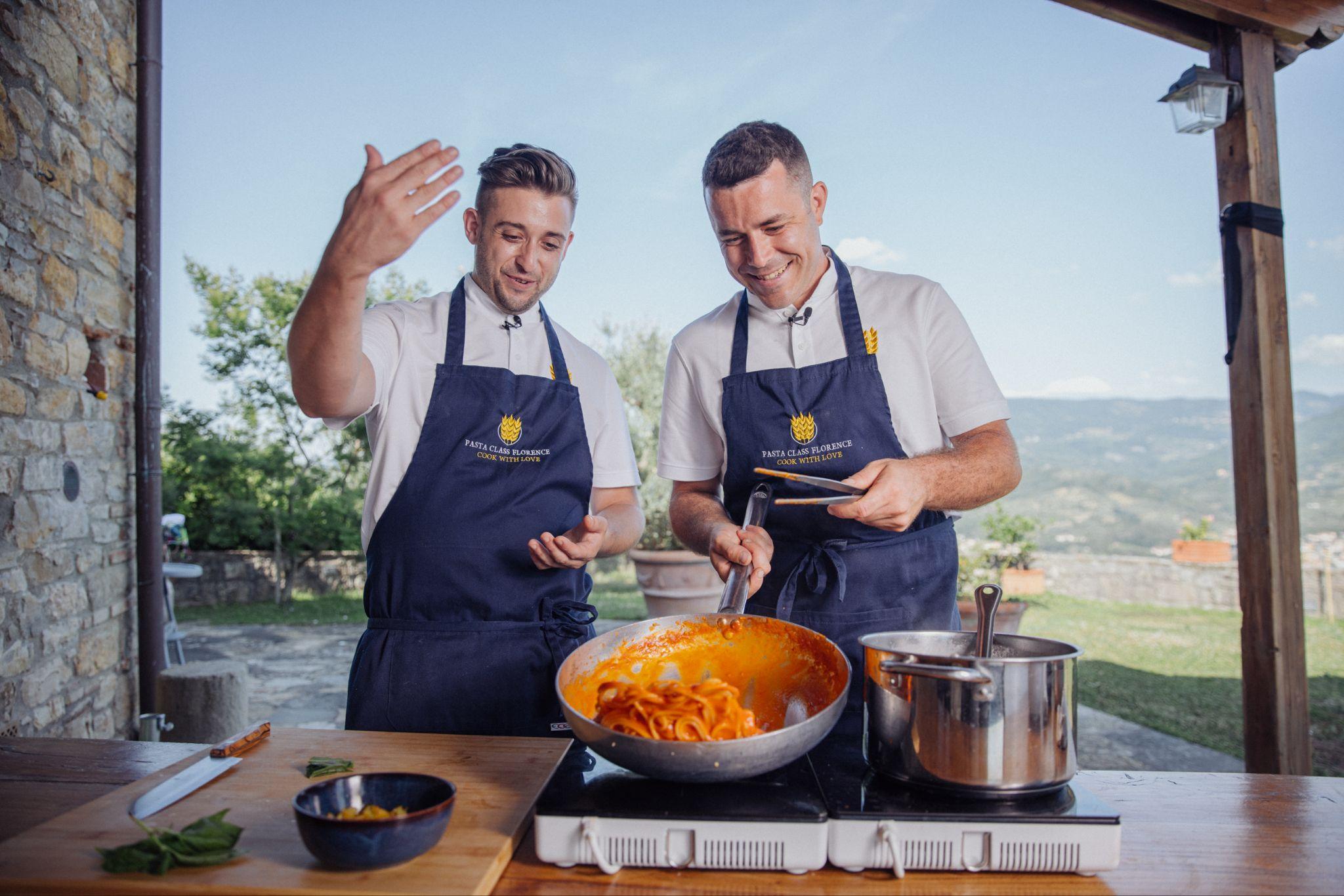
Learn to Make Real Italian Sauces in Florence
Making an authentic homemade pasta sauce is a skill that goes far beyond following a recipe; it’s about understanding ingredients and timing. Join us in Florence to learn traditional techniques passed down through generations, from simple tomato sauces to more elaborate family recipes. Discover the art of pasta and nonna’s recipes and reserve your spot in a class today.
Frequently Asked Questions
Should I use fresh or canned tomatoes for pomodoro sauce?
Both work well. Ripe, in-season fresh tomatoes are ideal, but good-quality canned whole peeled tomatoes are a reliable choice year-round.
Why do some tomato sauce recipes include sugar?
A small pinch of sugar can help balance particularly acidic tomatoes, though it isn’t necessary if your tomatoes are naturally sweet.
How long should tomato sauce simmer?
For a classic pomodoro sauce, 15 to 20 minutes is usually enough to thicken the sauce and mellow the raw tomato flavor.
What’s the difference between tomato sauce and bolognese?
Tomato sauce, or pomodoro, is a light, tomato-forward sauce, while bolognese is a richer, meat-based sauce that simmers for much longer.
Can I add onion to a traditional pomodoro sauce?
Many home recipes do include onion, but the most traditional versions rely mainly on tomatoes, garlic, and olive oil for a lighter result.