

If you’ve ever wondered how to make fresh pasta at home, the good news is that you only need three things: good flour, fresh eggs, and a little patience. Homemade pasta is one of the most rewarding dishes to master in the kitchen: silky, tender, and worlds apart from anything you’ll find in a box. In this guide, we’ll walk you through every step, from mixing your first homemade pasta dough to shaping it like an Italian nonna.
Why Learn How to Make Fresh Pasta at Home
Fresh pasta isn’t just about flavor, though that alone is reason enough. Making pasta by hand connects you to a centuries-old Italian tradition, one built around simple ingredients and careful technique. Once you understand the basics, you’ll be able to adapt the same dough into dozens of shapes, sauces, and regional specialties.
It also happens to be far more approachable than most people expect. You don’t need fancy equipment or professional training, just a clean countertop, a rolling pin (or pasta machine), and this guide.
The Basic Ingredients for Homemade Pasta Dough
Traditional fresh egg pasta relies on just two core ingredients: flour and eggs. The type of flour you choose matters more than most beginners realize. Many Italian recipes call for “00” flour, a finely milled soft wheat flour that produces a smooth, elastic dough. If you’re curious about how different flours behave, take a look at our breakdown of the difference between flour and semolina, as well as how flour strength affects your dough‘s texture and workability.
Classic Fresh Egg Pasta Recipe
This is the foundation recipe most Italian pasta shapes are built on.
Ingredients (serves 4):
- 400g “00” flour
- 4 large eggs (room temperature)
- A pinch of salt
Instructions:
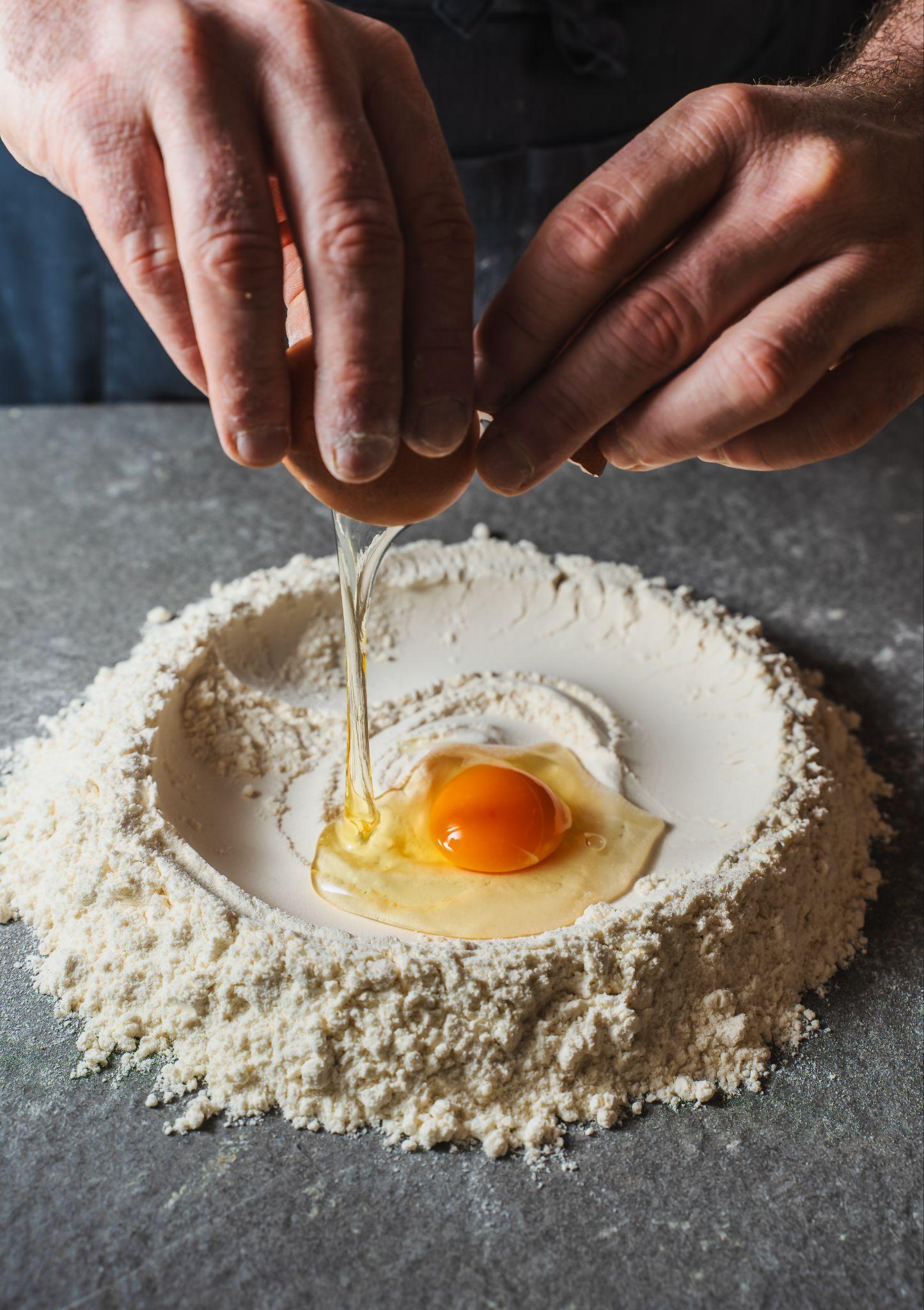
- Pour the flour onto a clean work surface and shape it into a mound with a well in the center.
- Crack the eggs into the well and add a pinch of salt.
- Using a fork, gently beat the eggs, gradually drawing in flour from the inner edges of the well.
- Once the mixture becomes too thick to whisk, use your hands to bring the dough together.
- Knead the dough for 8 to 10 minutes, until smooth and elastic (see kneading tips below).
- Wrap the dough in plastic wrap and let it rest at room temperature for 30 minutes before rolling.
For a more detailed, step-by-step breakdown with ratios and variations, our guide to classic pasta dough is a great next stop, along with our dedicated article on fresh egg pasta.
How to Knead Pasta the Right Way
Kneading is where the magic happens. It develops the gluten in the flour, giving your dough the elasticity it needs to be rolled thin without tearing.
The Technique
Push the dough away from you with the heel of your hand, fold it back over itself, rotate it a quarter turn, and repeat. This rhythm should feel steady and confident rather than rushed. A well-kneaded dough will feel smooth, slightly tacky but not sticky, and spring back gently when pressed.
Common Mistakes When Kneading
- Under-kneading: the dough will feel rough and tear easily when rolled.
- Too much flour: this dries out the dough and makes it stiff.
- Skipping the rest: resting relaxes the gluten, making the dough easier to roll.
How to Make Fresh Pasta at Home: Rolling and Shaping
Once your dough has rested, it’s time to roll it out, either with a rolling pin or a pasta machine, gradually working through the thickness settings until the sheet is thin enough to see your hand through it.
Exploring Pasta Shapes
Part of the fun of homemade pasta is discovering how the same dough can become dozens of different pasta shapes. Long ribbons like tagliatelle and fettuccine are among the easiest for beginners, while filled shapes like tortellini and ravioli take a bit more practice. If you want to explore the full range of options, our guide to types of fresh pasta covers regional shapes and their traditional uses in detail.
Essential Tools for Making Pasta at Home
You don’t need a professional kitchen to make great pasta, but a few tools will make the process much easier: a large wooden board or clean counter, a rolling pin or hand-crank pasta machine, a bench scraper, and a sharp knife for cutting shapes. For a complete rundown of what’s worth investing in, check out our list of kitchen tools essentials.
Tips for Perfect Homemade Pasta Every Time
- Always use room-temperature eggs, as they incorporate more easily into the flour.
- Rest your dough covered, to prevent it from drying out and cracking.
- Flour your work surface lightly; too much flour changes the dough’s hydration.
- Cook fresh pasta in generously salted boiling water for just 2 to 4 minutes. It cooks much faster than dried pasta.
Ready to Take Your Pasta-Making Further?
Reading about it is one thing. Making it with your own hands, guided by an expert, is another. If you’re ready to turn this guide into real, hands-on skill, join us for a class where you’ll learn the techniques passed down through generations. Discover the art of pasta through nonna’s recipes and book your seat at Pasta Class Florence today.
Frequently Asked Questions
What is the best flour for making fresh pasta at home?
“00” flour is the most commonly used for fresh egg pasta, thanks to its fine texture and ability to create a smooth, elastic dough. Semolina flour is often used for eggless or dried pasta shapes.
How long should you knead pasta dough?
Most homemade pasta dough needs about 8 to 10 minutes of kneading to develop enough gluten for a smooth, elastic texture that rolls out easily without tearing.
Do I need a pasta machine to make fresh pasta at home?
No, a rolling pin works perfectly well, though it takes more effort and practice to achieve an even, thin sheet. A pasta machine simply makes the process faster and more consistent.
How long does fresh pasta take to cook?
Fresh pasta cooks much faster than dried pasta, usually just 2 to 4 minutes in well-salted boiling water, depending on thickness and shape.
Can I make fresh pasta without eggs?
Yes. Many Italian regions make eggless pasta using just semolina flour and water, which results in a firmer, chewier texture, often used for shapes like orecchiette.