

Few pasta shapes are as fun to make as homemade strozzapreti. These short, twisted noodles are rolled entirely by hand, with no machine and no cutter required, just flour, water, and a bit of practice. The name literally means “priest stranglers,” a playful (if slightly dark) nod to old stories about priests eating so eagerly that they choked on the dense little twists. Whatever the story behind the name, strozzapreti remain a beloved staple of central Italian cooking, and they’re a wonderful shape to learn if you’re new to fresh pasta making.
What Is Strozzapreti Pasta?
Strozzapreti belong to the broad family of hand-rolled pasta shapes found throughout central Italy, with regional versions appearing in Emilia-Romagna, Umbria, and here in Tuscany. Each region has its own take on thickness and length, but the basic technique stays the same: a piece of dough is rolled between the palms or against a work surface until it forms a short, twisted, slightly irregular strand. That texture is exactly what makes strozzapreti so good at holding onto sauce. Every twist and ridge traps flavor. If you’d like to see how strozzapreti compares to other shapes, our guide on the different types of fresh pasta is a great place to start.
Strozzapreti Recipe: Ingredients You’ll Need
This strozzapreti recipe uses a simple egg-based dough, which is typical for many hand-rolled Tuscan pasta shapes. You don’t need special equipment, just a clean work surface and your hands.
Ingredients (serves 4)
- 400 g “00” flour
- 4 large eggs
- A pinch of salt
Step-by-Step Instructions
- Make a well. Mound the flour on a clean work surface and create a well in the center.
- Add the eggs. Crack the eggs into the well along with a pinch of salt, and beat them gently with a fork, gradually drawing in flour from the inner edges.
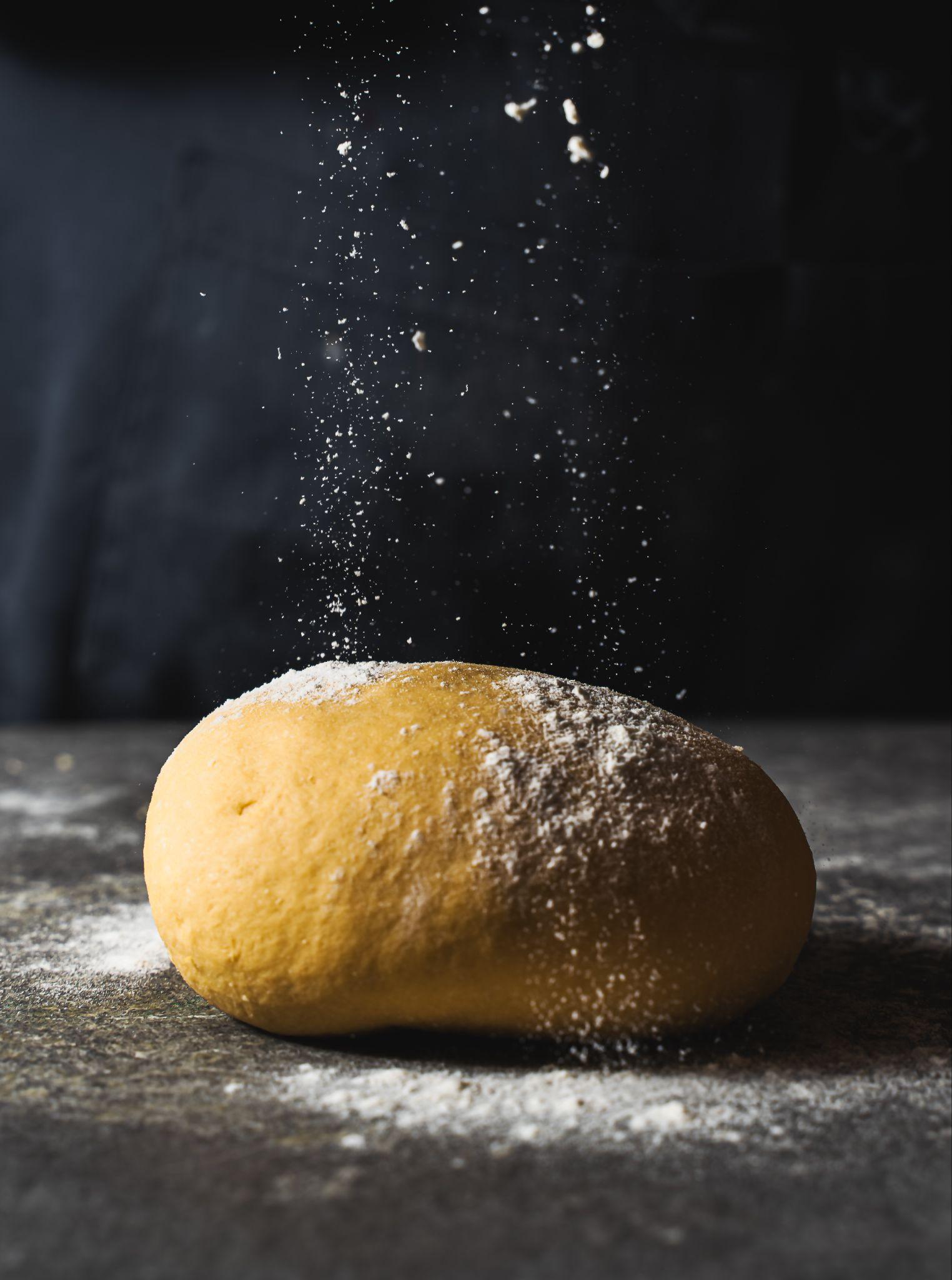
- Knead the dough. Once the mixture comes together, knead by hand for 8 to 10 minutes, until smooth and elastic. The dough should spring back slightly when pressed.
- Rest the dough. Wrap the dough and let it rest at room temperature for 30 minutes. This relaxes the gluten and makes shaping much easier.
- Cut into strips. Divide the dough into smaller pieces, then roll each piece into a rope about 1 cm thick. Cut the rope into short pieces, roughly 5 to 6 cm long.
- Roll each piece. Place a piece of dough on the work surface and roll it back and forth under your palm, moving your hand slightly to one side as you go. This creates the characteristic twisted, uneven shape of strozzapreti.
- Lay them out. Set the shaped pasta on a lightly floured tray, keeping the pieces separated so they don’t stick together.
- Cook. Boil in salted water for 2 to 4 minutes, or until tender, then toss immediately with your sauce of choice.
Tips for Perfect Hand-Rolled Pasta
Getting comfortable with hand-rolled pasta takes a little patience, but a few simple habits make a big difference:
- Keep your hands lightly floured so the dough doesn’t stick as you roll.
- Don’t over-roll each piece. A slightly irregular shape is part of the charm of strozzapreti, and over-handling can make the dough tough.
- Work in small batches, keeping the rest of the dough covered so it doesn’t dry out while you shape each piece.
- Cook in batches if needed, giving the pasta enough room to move in the pot for even cooking.
What to Serve with Strozzapreti
Because of their twisted, ridged shape, strozzapreti pair beautifully with rich, hearty sauces that cling to every fold. A classic choice is a slow-cooked meat ragù, but this pasta also works wonderfully with mushroom or sausage-based sauces. If you’re looking for inspiration, our recipe for pappardelle with wild boar ragù uses a sauce style that would be equally delicious tossed with homemade strozzapreti.
Common Mistakes to Avoid
Rolling the Dough Too Thin
Strozzapreti should have some bite. Rolling the strands too thin makes them fragile and more likely to fall apart during cooking.
Skipping the Resting Step
Resting the dough isn’t optional. It allows the gluten to relax, which makes rolling each piece by hand much smoother and less frustrating.
Overworking Each Piece
It’s tempting to try to make every strand perfectly uniform, but strozzapreti are meant to look a little rustic. A few extra seconds of rolling per piece can toughen the dough unnecessarily.
Master Homemade Strozzapreti in a Florence Pasta Class
Rolling your own homemade strozzapreti is one of those kitchen skills that feels like magic the first time it clicks, and it’s even better learned hands-on. Join us in Florence to practice this technique alongside other traditional recipes passed down through generations. Discover the art of pasta and nonna’s recipes and book your seat at the table.
Frequently Asked Questions
Why is it called strozzapreti?
The name means “priest stranglers,” a playful reference to old stories about priests eating the pasta so eagerly they nearly choked on it.
Do I need a pasta machine to make strozzapreti?
No. Strozzapreti are traditionally shaped entirely by hand, rolled between the palms or against a work surface rather than cut by a machine.
What’s the difference between strozzapreti and other hand-rolled pasta shapes?
While many hand-rolled shapes share a similar dough, strozzapreti are distinguished by their short, twisted form, created by rolling small pieces of dough at an angle.
How long does homemade strozzapreti take to cook?
Fresh strozzapreti typically cook in 2 to 4 minutes in boiling salted water, depending on thickness.
What sauce goes best with strozzapreti?
Their twisted shape holds onto thick, rich sauces particularly well, such as meat ragù or mushroom-based sauces.