If you’ve ever wondered how to make homemade cavatelli, you’re in the right place. These small, ridged pasta shells from Southern Italy are one of the easiest doughs to master, even if you’ve never rolled pasta before. Unlike many fresh pasta recipes, cavatelli need no eggs, no pasta machine, and no fancy equipment just flour, water, and your hands. In this guide, we’ll walk you through the whole process, from mixing the dough to shaping each little shell, so you can bring a taste of Southern Italy into your own kitchen.
What Is Cavatelli Pasta?
Cavatelli are a traditional shape from Puglia and other regions of Southern Italy. The name comes from the Italian verb cavare, meaning “to hollow out,” which describes exactly how the pasta is shaped: small pieces of dough are dragged and curled with the fingers or a knife to create a shell-like form with a soft ridge down the center. That curved shape is perfect for holding onto chunky sauces, like tomato and ricotta, sausage ragù, or simple sautéed vegetables.
Cavatelli Dough: Simple Ingredients, No Eggs Required
One of the things that makes cavatelli so approachable is the dough itself. While many fresh pasta shapes rely on an egg-based dough, cavatelli belong to the family of eggless pasta, made only with flour, water, and a pinch of salt. This makes cavatelli dough naturally lighter and slightly chewier than egg pasta, and it also means the recipe is naturally suited to anyone avoiding eggs.
Why Semolina Flour Matters
The flour you choose has a big impact on the final texture. Traditional cavatelli are made with semolina pasta flour, milled from durum wheat, rather than the soft wheat “00” flour used for egg pastas. Semolina gives the dough more structure and a slightly golden color, and it holds its shape well during the rolling and shaping process. If you’re curious about how semolina differs from other flours and why it behaves differently in pasta dough, our guide on the difference between flour and semolina breaks it down in more detail.
Homemade Cavatelli Recipe
Ready to get your hands doughy? Here’s a straightforward recipe you can follow at home.
Ingredients (serves 4)
- 300 g semola
- 150 g warm water
- 1 drizzle of oil
- 1 pinch of salt
Step-by-Step Instructions
- Make a well. Pour the semolina flour onto a clean work surface or into a large bowl, and shape it into a mound with a well in the center.
- Add water gradually. Pour the lukewarm water and a drizzle of oil and pinch of salt into the well a little at a time, using a fork to slowly incorporate the flour from the inner edges.
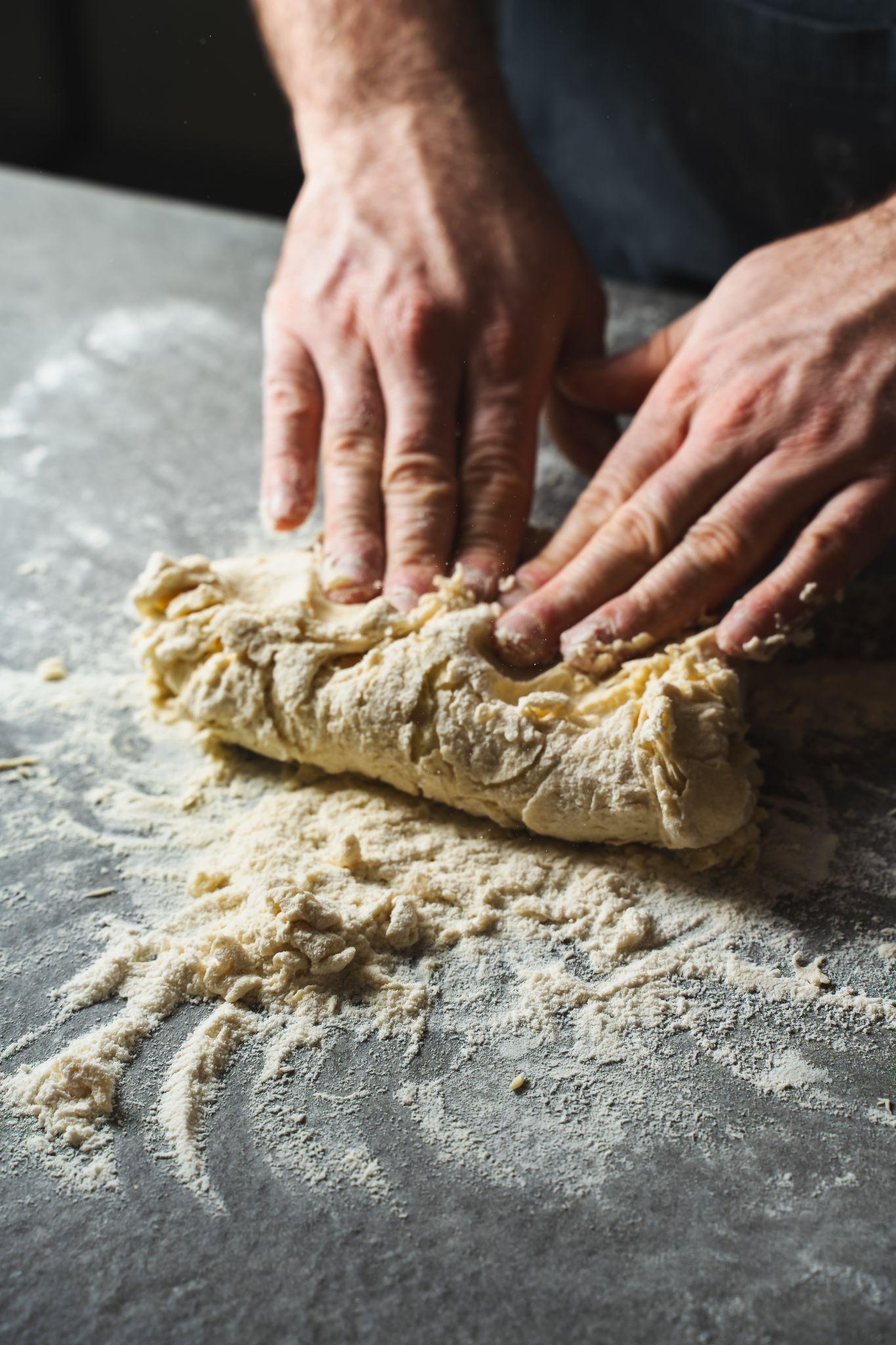
- Knead the dough. Once the mixture comes together, knead by hand for about 10 minutes, until the dough is smooth, elastic, and no longer sticky. Add a spoonful of flour if it feels too wet, or a few drops of water if it feels dry.
- Rest the dough. Wrap the dough in plastic wrap or cover it with a clean kitchen towel, and let it rest at room temperature for about 30 minutes. This allows the gluten to relax, making the dough easier to shape.
- Cut into strips. Divide the rested dough into smaller pieces. Roll each piece into a rope about 1 cm thick, then cut it into small chunks roughly 1 to 1.5 cm long.
- Shape the cavatelli. Press each small piece of dough with two fingers (or the tip of a butter knife) and drag it toward you across the work surface. This motion curls the edges upward and hollows out the center, creating the classic shell shape.
- Lay them out to dry. Place the shaped cavatelli on a lightly floured tray, spacing them out so they don’t stick together. Let them air-dry for 20 to 30 minutes before cooking, or longer if you plan to store them.
- Cook. Boil in salted water for 3 to 5 minutes, or until they float to the surface and are tender to the bite. Toss with your favorite sauce and serve immediately.
Tips for Perfect Homemade Cavatelli Every Time
- Keep the dough hydrated but firm. Semolina absorbs water differently from soft wheat flour, so add the water slowly and adjust as you go.
- Practice the shaping motion. The drag-and-curl technique takes a few tries to get comfortable with. Don’t worry if your first cavatelli look uneven, they’ll still taste great.
- Work in batches. Keep unshaped dough covered while you work, so it doesn’t dry out and crack.
- Freeze for later. Homemade cavatelli freeze very well. Spread them on a tray to freeze individually, then transfer to a bag once solid, and cook straight from frozen.
Common Mistakes to Avoid
Using the Wrong Flour
Substituting all-purpose flour for semolina will give you a softer, less structured cavatelli that can turn mushy when boiled. If you’re unsure which flour suits which pasta shape, take a look at our article on the difference between flour and semolina before you start.
Skipping the Resting Time
It’s tempting to shape the dough right away, but skipping the rest period makes the dough harder to work with and can lead to cavatelli that shrink or crack while cooking.
Overcrowding the Pot
Cavatelli need room to move in the boiling water. Cook them in batches if necessary, so they cook evenly and don’t stick together.
Learn to Make Cavatelli Hands-On in Florence
Reading about pasta-making is one thing, but there’s nothing like shaping your own cavatelli under the guidance of an experienced instructor. If you’re visiting Florence and want to learn this technique, along with other classic Italian pasta shapes, join us for a hands-on session where you’ll knead, shape, and taste your own homemade pasta. Book your pasta-making class in Florence and take a real piece of Italian tradition home with you.
Frequently Asked Questions
Do I need a pasta machine to make cavatelli?
No. Cavatelli are traditionally shaped entirely by hand, using just your fingers or a small knife to drag and curl each piece of dough.
Can I make cavatelli with all-purpose flour instead of semolina?
You can, but the texture will be softer and less firm. Semolina flour gives cavatelli their characteristic bite and holds up better during cooking.
Why is cavatelli dough made without eggs?
Cavatelli belong to a category of Southern Italian pasta traditionally made with just flour and water. This eggless approach produces a firmer, chewier texture suited to hearty sauces.
How long does homemade cavatelli take to cook?
Fresh cavatelli usually cook in 3 to 5 minutes in boiling salted water. They’re ready once they float to the surface and feel tender.
Can I freeze homemade cavatelli?
Yes. Freeze them in a single layer on a tray until solid, then transfer to a freezer bag. Cook them straight from frozen, adding a minute or two to the cooking time.