

Finding the best wine for carbonara, ragù and pesto comes down to understanding what each sauce actually needs from a glass. These three classics couldn’t be more different from one another, creamy and savory, rich and slow-cooked, fresh and herbaceous, so naturally, they each call for their own approach to pairing.
In this guide, we’ll go through each sauce one at a time, explaining exactly what to look for in a bottle and why it works.
Wine for Carbonara: Cutting Through the Richness
Carbonara is built on eggs, cured pork, and cheese, a combination that’s rich, creamy, and salty all at once. If you want to understand the sauce itself in more depth before pairing it, our guide to carbonara sauce breaks down exactly what goes into an authentic version.
What Makes Carbonara Tricky to Pair
The biggest challenge with wine for carbonara is the fat content. Between the egg yolks, the guanciale (a cured pork cheek, similar to pancetta but leaner in flavor and richer in texture), and the cheese, the dish coats your palate heavily. A wine without enough acidity will just add to that heaviness instead of balancing it.
What to Look For Instead
The best approach is a wine with bright acidity and moderate body, something that cuts through the richness and resets your palate between bites, rather than competing with the dish’s intensity. A wine that’s too bold or tannic (meaning high in the drying, gripping sensation you feel on your gums from grape skins and seeds) will clash with the delicate egg-based sauce.
Wine with Ragù: Matching Depth with Depth
Ragù is the opposite kind of dish: slow-cooked meat, simmered for hours, often with a splash of wine already in the pot. If you’re curious about how this sauce is traditionally built, our article on bolognese sauce walks through the full process.
Why Ragù Needs a Sturdier Wine
Because ragù is so deeply savory and full-bodied, it needs a wine with structure to match it. A light, delicate wine will simply disappear next to a sauce this intense. This is one case where more tannin and body actually works in your favor.
The Logic Behind the Pairing
Since many ragù recipes already include wine as an ingredient, it makes sense that a similar style of wine on the table completes the circle. The slow-cooked richness of the meat and the structure of a fuller-bodied red were, in a sense, made for each other.
Wine with Pesto: Matching Freshness with Freshness
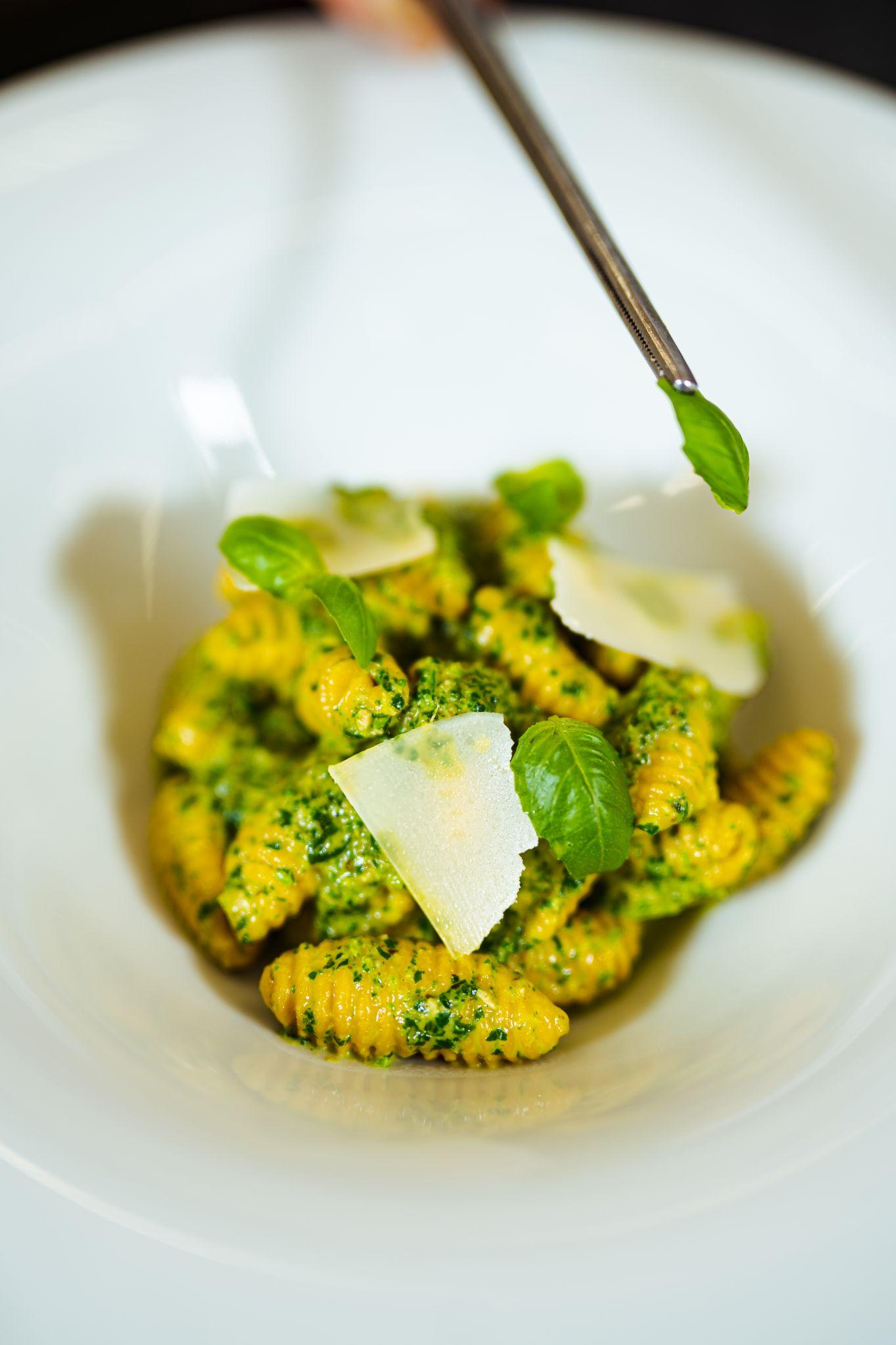
Pesto is a completely different animal: fresh basil, garlic, pine nuts, and olive oil, blended into a bright, uncooked sauce. To understand what makes an authentic pesto, take a look at our breakdown of pesto sauce.
Why Pesto Needs a Lighter Touch
Because pesto isn’t cooked and relies on fresh, aromatic ingredients, it needs a wine that won’t overpower those delicate flavors. A heavy, tannic red would completely bury the basil and garlic notes that make pesto what it is.
What Works Best
A lighter, aromatic wine, one with its own herbal or fresh character, tends to complement pesto rather than compete with it. The goal is harmony between two fresh, vibrant flavors rather than one overwhelming the other.
A Simple Way to Remember These Pairings
If there’s one takeaway from carbonara, ragù, and pesto, it’s this: rich and creamy dishes need acidity, slow-cooked and heavy dishes need structure, and fresh, uncooked dishes need lightness. Once you internalize that logic, you can apply it well beyond these three sauces to almost any pasta dish you encounter.
Trust Your Palate, Not Just the Rules
Pairing guidelines are a helpful starting point, but the most reliable way to learn is by tasting. Try the same sauce with two different wines side by side, and you’ll notice immediately which one feels balanced and which one fights against the dish.
Taste the Difference for Yourself
Reading about the best wine for carbonara, ragù and pesto is one thing, tasting it firsthand is another. Join our pasta and Chianti wine adventure and experience how the right glass transforms a plate of pasta into something truly memorable.
Frequently Asked Questions
What is the best wine for carbonara?
A wine with bright acidity and moderate body works best, since it cuts through the richness of the egg, cheese, and guanciale without overwhelming the dish.
What wine pairs well with ragù?
A fuller-bodied, structured red is ideal, since it can stand up to the depth and richness of a slow-cooked meat sauce.
What wine goes with pesto?
A lighter, aromatic wine complements pesto best, since it won’t overpower the fresh basil, garlic, and pine nut flavors.
Why does wine pairing change so much between these three sauces?
Each sauce has a different weight and cooking style: carbonara is rich and creamy, ragù is slow-cooked and dense, and pesto is fresh and uncooked, so each needs a different kind of wine to balance it.
Is it better to use an Italian wine specifically for these pairings?
Not required, but many Italian wines developed alongside these very dishes, so they often pair naturally and reliably.