Homemade orecchiette are one of the most recognizable pasta shapes in Italy: small, ear-shaped discs with a rough, dimpled surface that’s perfect for holding onto sauce. Unlike egg-based pasta from northern Italy, orecchiette come from Puglia, in the south, and are traditionally made with just semolina flour and water. In this guide, we’ll show you exactly how to make orecchiette by hand, step by step, without any special equipment.
What Makes Orecchiette Different
Orecchiette belong to a family of southern Italian pasta shapes made without eggs. Instead, they rely on semolina pasta dough, which uses durum wheat semolina, a coarser, high-protein flour that gives the pasta its firm, chewy bite. If you’re curious about how semolina compares to the softer “00” flour used in egg pasta, our article on the difference between flour and semolina explains the distinction in detail.
This simplicity is part of what makes orecchiette such a good shape for beginners: no eggs to balance, no delicate sheets to roll paper-thin. Just flour, water, and your hands.
A Shape Rooted in Puglia
Orecchiette are considered one of the signature pasta shapes of Puglia pasta traditions, and they’re often served with simple, vegetable-forward sauces, classically paired with turnip greens (cime di rapa) or fresh tomato and ricotta salata.
Homemade Orecchiette Dough: Ingredients
Making orecchiette dough requires very few ingredients, but getting the ratio right matters for the texture.
Ingredients (serves 4):
- 400g semolina flour (semola di grano duro rimacinata)
- 200ml warm water
- A pinch of salt
How to Make Homemade Orecchiette: Step-by-Step
Step 1: Mix the Dough
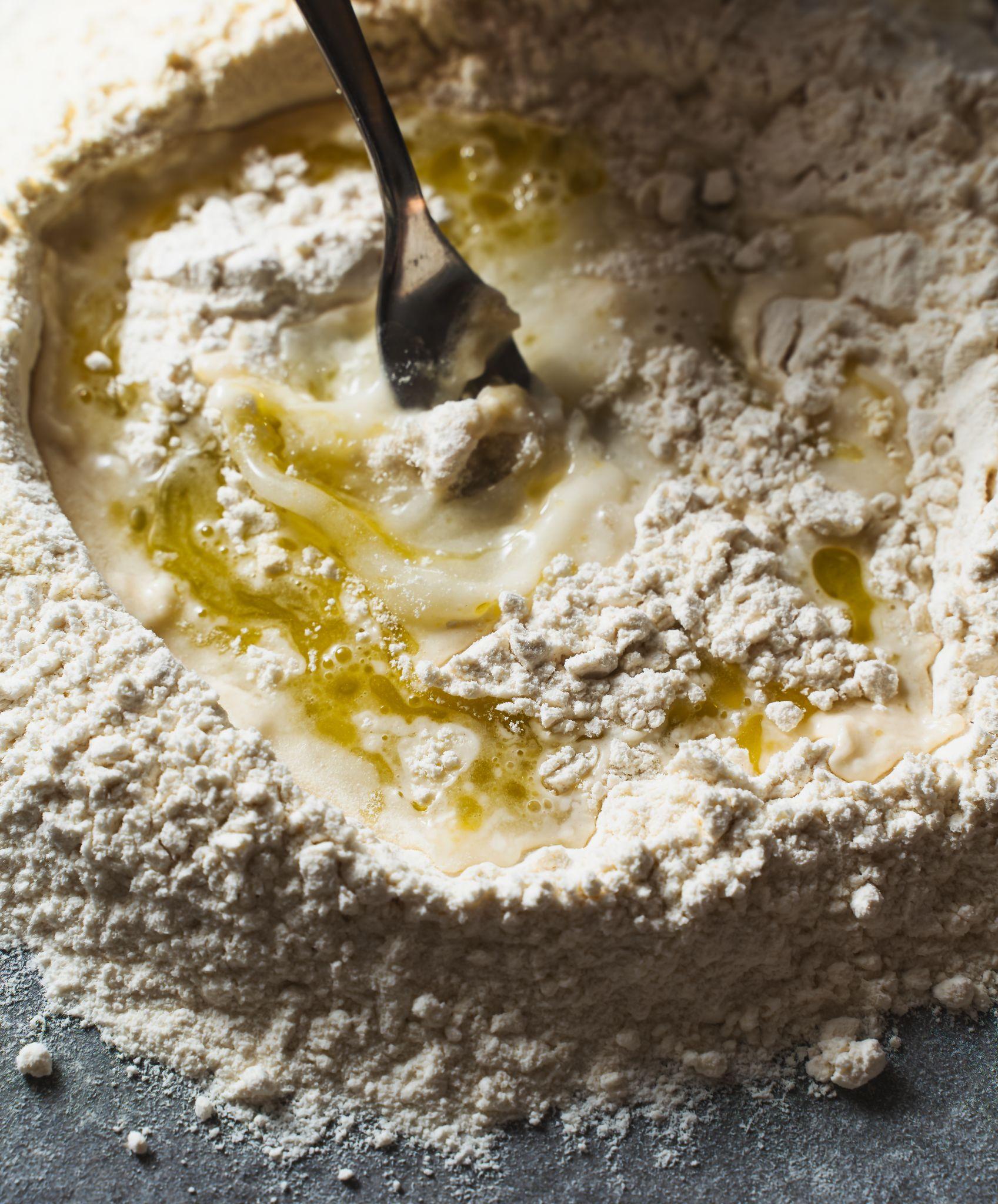
- Pour the semolina flour onto a clean work surface and shape it into a mound with a well in the center.
- Add the salt to the warm water, then gradually pour it into the well.
- Using a fork, slowly incorporate the flour from the inner edges of the well into the water.
- Once the mixture thickens, bring it together with your hands into a rough dough.
Step 2: Knead the Dough
- Knead the dough on the work surface for about 10 minutes, until it becomes smooth, firm, and elastic. Semolina dough is stiffer than egg pasta dough, so expect to use a bit more effort.
- Shape the dough into a ball, cover it with a clean kitchen towel or plastic wrap, and let it rest for 30 minutes at room temperature.
Step 3: Shape the Orecchiette
- Cut off a piece of dough and roll it into a rope about 1cm thick.
- Cut the rope into small pieces, roughly the size of a chickpea.
- Using a rounded dinner knife, press and drag each piece firmly across the work surface. This motion creates the pasta’s signature rough, ridged texture, which helps sauce cling to it.
- Turn the small disc of dough inside out over your thumb to form the classic “little ear” shape.
- Place the shaped orecchiette on a lightly floured tray while you continue with the rest of the dough.
Tips for Perfect Orecchiette Every Time
Getting the Texture Right
The rough surface isn’t just decorative, it’s functional. If your orecchiette come out too smooth, try using a slightly worn or textured knife blade, and make sure your work surface isn’t too floured, as excess flour can prevent the dough from gripping properly.
Drying and Storing
Fresh orecchiette can be cooked immediately, or left to dry at room temperature for a few hours if you plan to store them. Once fully dried, they keep well in an airtight container for future use.
Cooking Orecchiette
Because they’re denser than egg pasta, orecchiette typically need a slightly longer cooking time usually around 8 to 10 minutes in generously salted boiling water, though this can vary depending on size and dryness.
Bring the Tradition of Puglia to Your Kitchen
Learning how to make orecchiette by hand is a wonderful way to connect with one of Italy’s most distinctive regional pasta traditions. The technique takes a little practice, but the rhythm becomes second nature surprisingly quickly. If you’d like to master it with hands-on guidance from an expert, join us for one of our cooking classes in Florence and learn to shape homemade orecchiette, and other traditional Italian pasta shapes, from scratch.
Frequently Asked Questions
What flour is used for homemade orecchiette?
Orecchiette are traditionally made with semolina flour, a coarser durum wheat flour, rather than the “00” flour used in egg-based pasta. This gives them a firmer, chewier texture.
Do orecchiette contain eggs?
No. Unlike many pasta shapes from northern Italy, orecchiette are traditionally made with just semolina flour and water, without eggs.
Why do orecchiette have a rough surface?
The rough, ridged texture is created by dragging the dough firmly with a knife. It’s not just for looks. It helps the pasta hold onto sauce better.
How long does homemade orecchiette dough need to rest?
About 30 minutes at room temperature, covered, so the dough relaxes and becomes easier to shape.
How long do orecchiette take to cook?
Fresh orecchiette usually take around 8 to 10 minutes in salted boiling water, a bit longer than egg-based pasta due to their denser texture.