

Spaghetti alle vongole is one of Italy’s most iconic seafood dishes, and it’s also one of the simplest. With just a handful of ingredients, this clam pasta relies on technique and timing rather than a long list of components. It’s a dish you’ll find along much of the Italian coastline, prepared in slightly different ways from region to region, but always built around the same idea: fresh clams, good olive oil, garlic, and pasta, brought together in a few quick minutes at the stove.
What Is Spaghetti alle Vongole?
Spaghetti alle vongole translates simply to “spaghetti with clams.” It belongs to the broader category of Italian seafood pasta, dishes that pair pasta with fish or shellfish rather than a tomato- or meat-based sauce. What makes this dish stand out is its simplicity: there’s no cream, and in its most traditional form, no tomato either, just a light broth created by the clams themselves as they open in the pan. If you enjoy seafood-based pasta dishes, you might also like our recipe for seafood gnocchi or our calamari ragù, both of which bring the flavors of the sea to the table in different ways.
Spaghetti Vongole Recipe: Ingredients
This spaghetti vongole recipe serves four and comes together quickly, so it’s worth having everything ready before you start cooking.
Ingredients (serves 4)
- 350 g spaghetti
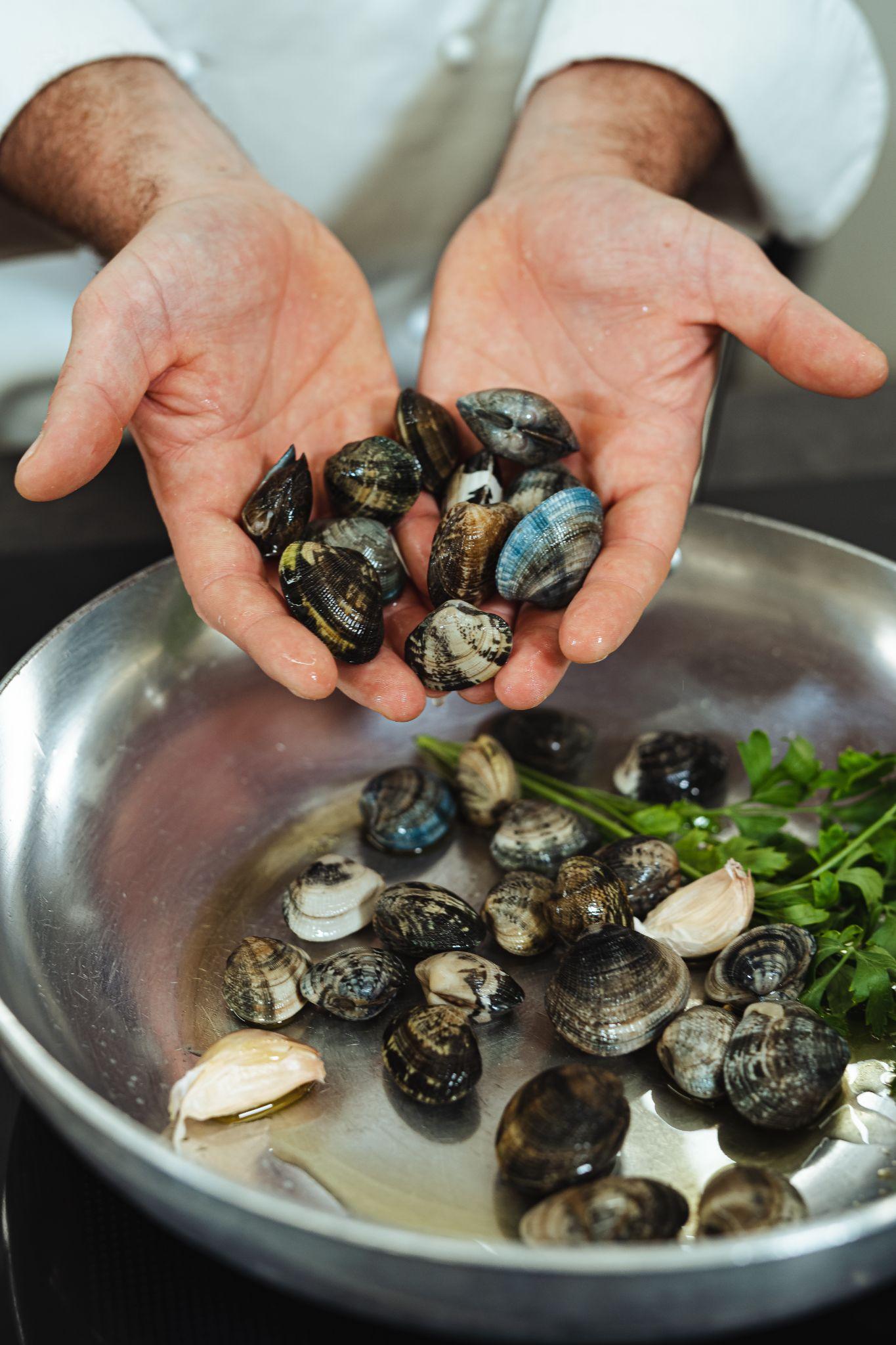
- 1 kg fresh clams (vongole), such as carpet shell clams
- 4 tablespoons extra virgin olive oil
- 3 garlic cloves, thinly sliced
- 1 fresh chili pepper, sliced (optional, or a pinch of chili flakes)
- 100 ml dry white wine
- A handful of fresh parsley, chopped
- Salt, to taste
Step-by-Step Instructions
- Purge the clams. Rinse the clams under cold running water, then soak them in a bowl of salted water for at least 1 hour. This encourages them to release any sand trapped inside their shells. Discard any clams that remain open and don’t close when tapped.
- Cook the pasta water. Bring a large pot of water to a boil. Salt it once boiling, keeping in mind that the clams themselves will add saltiness to the final dish, so go easy.
- Start the garlic and oil base. In a large, wide pan, heat the olive oil over medium heat. Add the sliced garlic and chili, and cook gently for about a minute, until fragrant but not browned.
- Add the clams. Drain the clams and add them to the pan. Pour in the white wine, raise the heat slightly, and cover the pan.
- Cook until the clams open. Shake the pan occasionally and cook for 3 to 5 minutes, until the clams have opened. Discard any that remain closed.
- Cook the spaghetti. While the clams cook, drop the spaghetti into the boiling water and cook until very al dente, about 1 to 2 minutes less than the package instructions, since it will finish cooking in the pan.
- Combine pasta and clams. Using tongs, transfer the drained spaghetti directly into the pan with the clams, along with a ladle of pasta cooking water.
- Toss to finish. Toss everything together over medium-high heat for 1 to 2 minutes, allowing the pasta to absorb the clam juices and the starchy water to bind everything into a light sauce. Add chopped parsley just before serving.
Tips for the Best Clam Pasta
- Choose clams carefully. Fresh clams should be tightly closed or close quickly when tapped. Any that stay open or feel unusually heavy (a sign of sand or mud) should be discarded before cooking.
- Don’t overcook the clams. Once they open, they’re done. Leaving them in the pan too long makes them tough and rubbery.
- Save some pasta water. The starchy cooking water helps create a light, glossy sauce without needing any cream or butter.
- Keep it simple. Traditional spaghetti alle vongole relies on quality ingredients rather than a long list of additions, so resist the urge to add extra elements that distract from the clams themselves.
What to Drink with Spaghetti alle Vongole
A light, crisp white wine is the classic pairing for this dish, since it complements the delicate brininess of the clams without overpowering them. If you’re curious about how to match wine with different pasta courses, our guide to pairing wine with first courses offers useful guidance for choosing the right bottle for seafood pasta.
Common Mistakes to Avoid
Skipping the Purging Step
Skipping the soaking step can leave your dish gritty with sand, which is one of the most common complaints with homemade clam pasta.
Overcooking the Pasta
Because the spaghetti finishes cooking in the pan with the clams, boiling it fully beforehand will leave you with mushy pasta by the time it’s plated.
Adding Too Much Salt
Clams release their own briny liquid as they cook, so it’s easy to over-salt this dish if you’re not careful with the pasta water and any additional seasoning.
Learn to Cook Authentic Seafood Pasta in Florence
There’s nothing quite like learning to cook spaghetti alle vongole hands-on, from selecting the freshest ingredients to mastering the timing that makes this dish come together perfectly. Join us for a market tour and pasta cooking class in Florence, where you’ll shop for ingredients like a local and learn to prepare classic Italian recipes from scratch. Book your market tour and pasta class today.
Frequently Asked Questions
What type of clams should I use for spaghetti alle vongole?
Small, fresh clams such as carpet shell clams work well. Look for tightly closed shells or ones that close quickly when tapped.
Do I need tomato for spaghetti alle vongole?
No, the traditional version of this dish is made without tomato, relying instead on the natural juices released by the clams.
How do I get rid of sand in clams before cooking?
Soak the clams in salted water for at least an hour before cooking, which encourages them to release any trapped sand.
Can I use frozen clams instead of fresh?
Fresh clams are recommended for the best flavor and texture, though good-quality frozen clams can be used in a pinch if fresh ones aren’t available.
What wine pairs best with clam pasta?
A light, crisp white wine typically complements the briny flavor of clams without overwhelming the dish.